The context
The European Union has set a very ambitious goal of achieving carbon neutrality by 2050. To achieve this, all sectors will need to fundamentally rethink their energy consumption. In this context, the decarbonization of high-temperature heat production in industry poses a particular challenge. Indeed, at this stage, several technological options are possible depending on different industrial processes. Some processes can be electrified, while others may still rely on combustion processes. In some cases, decarbonized hydrogen may be used, but for certain applications, it might be preferable to transform hydrogen into synthetic methane to avoid the need for extensive modifications to industrial installations.
Objectives of the project
The aim of the HEFAISTOS project is to assess to what extent, at what costs and under which technical conditions, high temperature industrial heat and industrial feedstock supply can be decarbonized in the most important and energy intensive industrial sectors, and what impact these transformations may have on the power transmission grid.
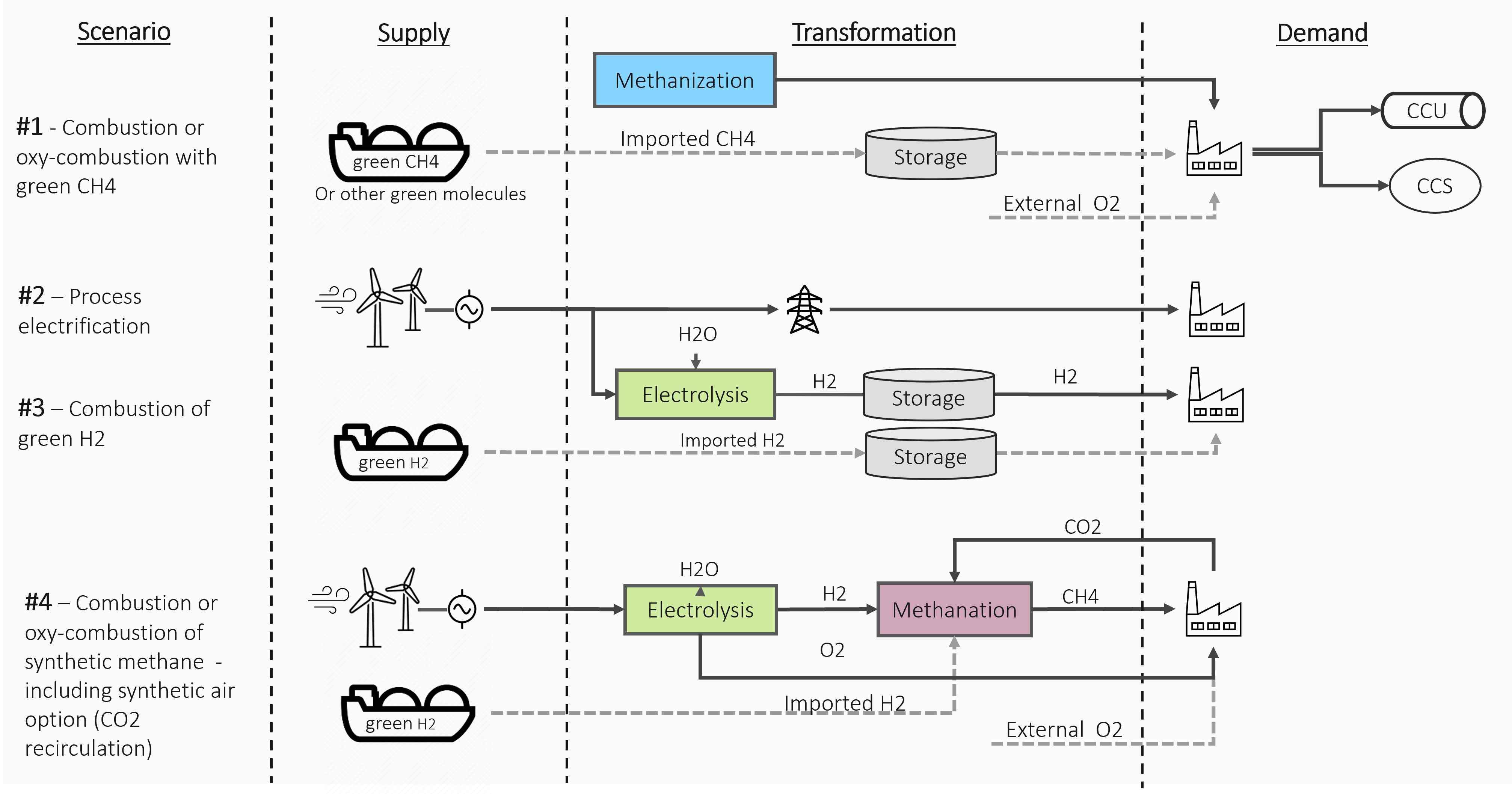
Different ways of defossilizing high temperature processes in belgium will be analyzed:
- Electrification
- Hydrogen
- E methane with use of oxigen from electrolyzers to reduce CO2 capture costs

The consortium
The HEFAISTOS project is led by ICEDD in collaboration with ULB, VITO, LABORELEC, CRIGEN and APERAM. It is financed by the Energy Transition Fund.